Indonesian and Pakistani Students Discuss Educational Technology and Learning Culture
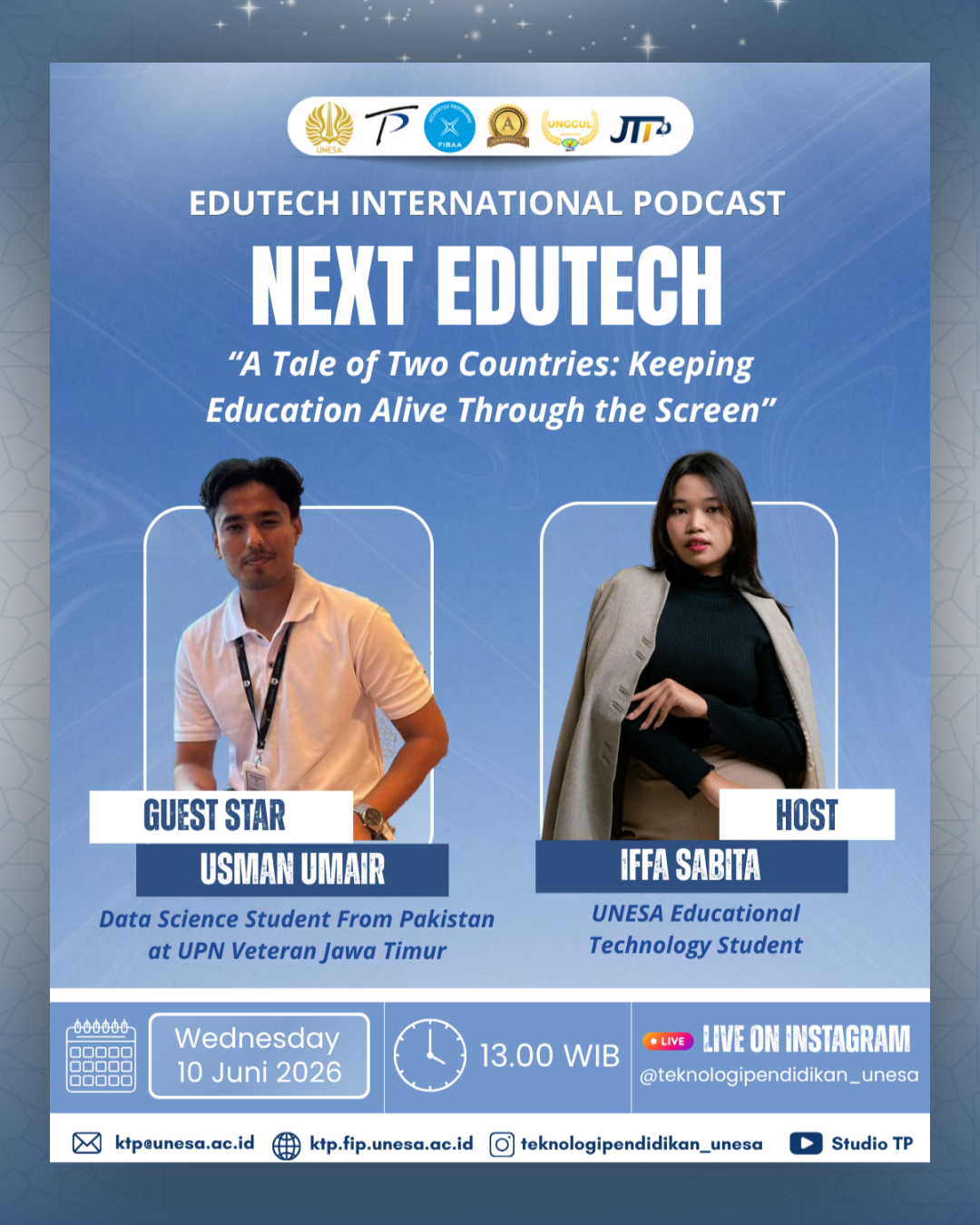
Indonesian and Pakistani education systems, particularly in the use of technology for learning, were discussed in an Instagram Live podcast hosted by the Educational Technology program at Universitas Negeri Surabaya (UNESA). The discussion featured Usman, an international student from Pakistan studying Data Science at UPN “Veteran” East Java.
The podcast was hosted by Ifa Sabita Fitriani and focused on the differences in learning experiences between Indonesia and Pakistan, including digital learning access, student culture, technology use, and the role of human interaction in education.
During the discussion, Usman explained that access to educational technology in Pakistan differs significantly between large cities and rural areas. Major cities such as Lahore, Karachi, and Islamabad generally have better access to internet connections and laptops. Meanwhile, students in villages and smaller towns often face limited internet access and frequent power outages.
Despite these challenges, Pakistani students continue to find alternative ways to learn. Usman shared that some students download educational videos to watch offline, create WhatsApp groups, and exchange notes and learning materials with one another.
The discussion also addressed stereotypes about Pakistan's technological development. Usman explained that although some Indonesian students may perceive Pakistan as being behind in technology, young people in Pakistan are increasingly adapting to modern technology. Many develop digital skills such as graphic design, video editing, and content writing through online platforms.
Another key topic was the role of human connection in technology-based learning. Usman emphasized that teachers in both Pakistan and Indonesia are highly respected and are not simply instructors. According to him, face-to-face interaction provides an important sense of connection that technology cannot completely replace.
Usman also shared his experience as an international student in Indonesia. He initially faced difficulties because most lectures and educational materials were delivered in Indonesian. However, he gradually adapted with support from his lecturers. Some lecturers also used English to help him understand the learning materials.
From Indonesia, Usman said he appreciated the culture of supporting and helping one another. At the same time, he highlighted the resilience of Pakistani students who continue learning despite limited internet access, power outages, and other challenges.
The podcast provided an opportunity to exchange perspectives on educational technology and learning cultures between Indonesia and Pakistan. The discussion highlighted that technology can support education, but students' creativity, resilience, social support, and human connection remain important parts of the learning process.
Writer: Chantika Yuliana Intan Purwanti (2025A)
